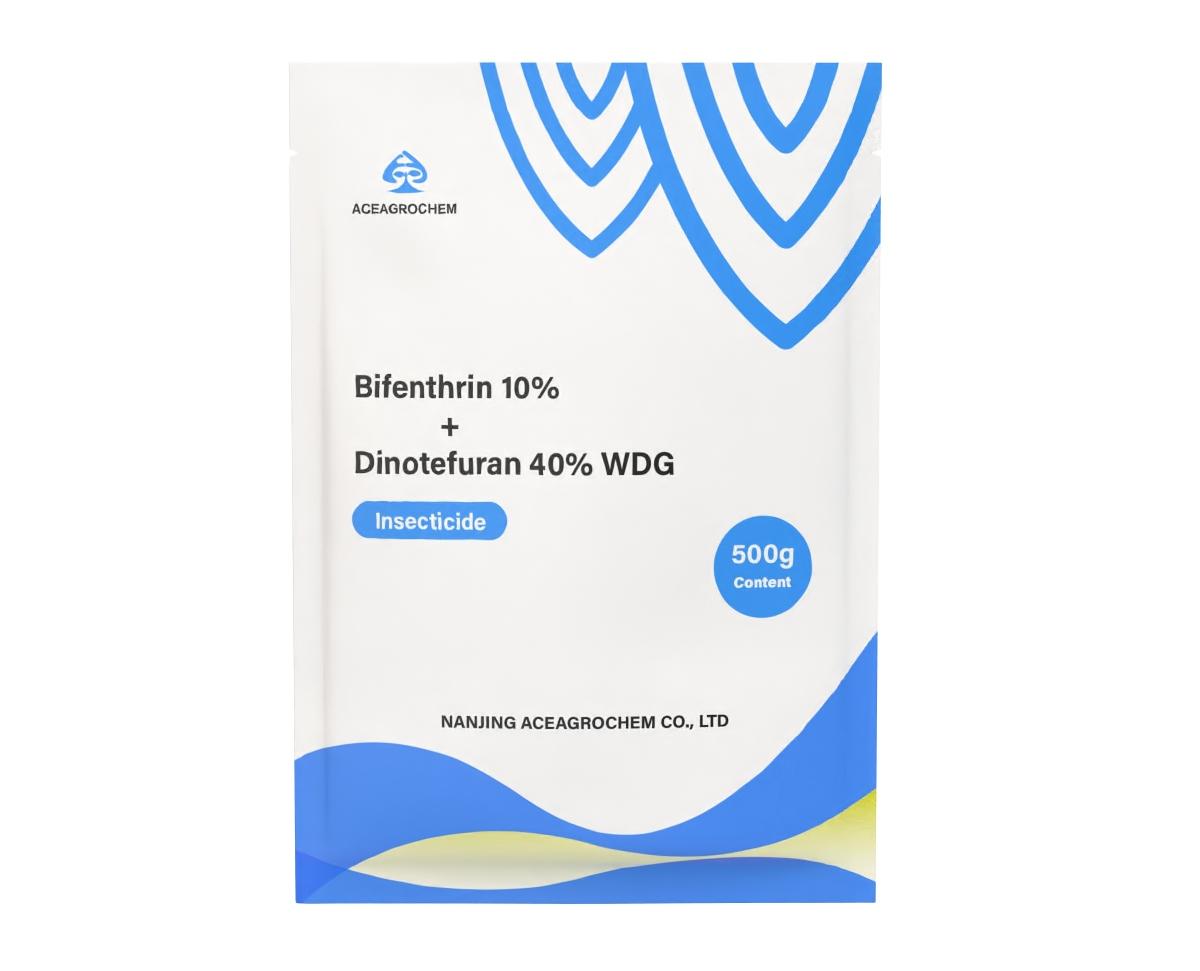
Bifenthrin 10% + Dinotefuran 40% WDG
Classification:
Insecticide
Formulation:
Bifenthrin 10% + Dinotefuran 40% WDG (Water Dispersible Granules)
CAS NO:
Bifenthrin: 82657-04-3;
Dinotefuran: 165252-70-0
USAGE:
This insecticide is used for controlling a wide range of insects in various
crops such as fruits, vegetables, and cereals. It is effective against aphids,
whiteflies, thrips, and some beetles.
Pack size:
100g, 250g, 500g, 1kg/bag, or as required
Direction for Use
| Crop | Target Insects | Dosage (Bifenthrin 10% + Dinotefuran 40% WDG) | Application Timing | Remarks |
|---|---|---|---|---|
| Fruits (e.g., apples) | Aphids | 200-300 g/ha | Early infestation stage | 1) REI: 12 hrs 2) Max 2 applications/season |
| Vegetables (e.g., cucumbers) | Whiteflies | 150-250 g/ha | When the first signs of infestation appear | Add a spreader for better coverage |
| Cereals (e.g., wheat) | Thrips | 180-280 g/ha | Before heading stage | PHI: 21 days |
Product Details
Mode of Action:
-Bifenthrin acts on the insect's nervous system, causing paralysis and death by
disrupting the sodium channels.
-Dinotefuran is a neonicotinoid that acts on the insect's nicotinic acetylcholine
receptors, interfering with the nerve impulse transmission.
-The combination provides both contact and systemic activity.
Benefits:
-Broad-spectrum insect control.
-Quick knockdown effect.
-Long-lasting residual activity.
-Compatible with many other Pesticide (check before tank-mixing).
Precautions:
-PPE: Chemical-resistant gloves, masks, goggles.
-Do not apply during flowering to avoid harming pollinators.
-Store in a cool, dry place away from food and feed.
-Keep out of reach of children and pets.
Environmental Hazards:
-Toxic to bees and other beneficial insects. Avoid application during their active
periods.
-May be toxic to aquatic organisms. Do not contaminate water bodies.
-Degrades in soil with a half-life of several weeks depending on environmental
conditions.